


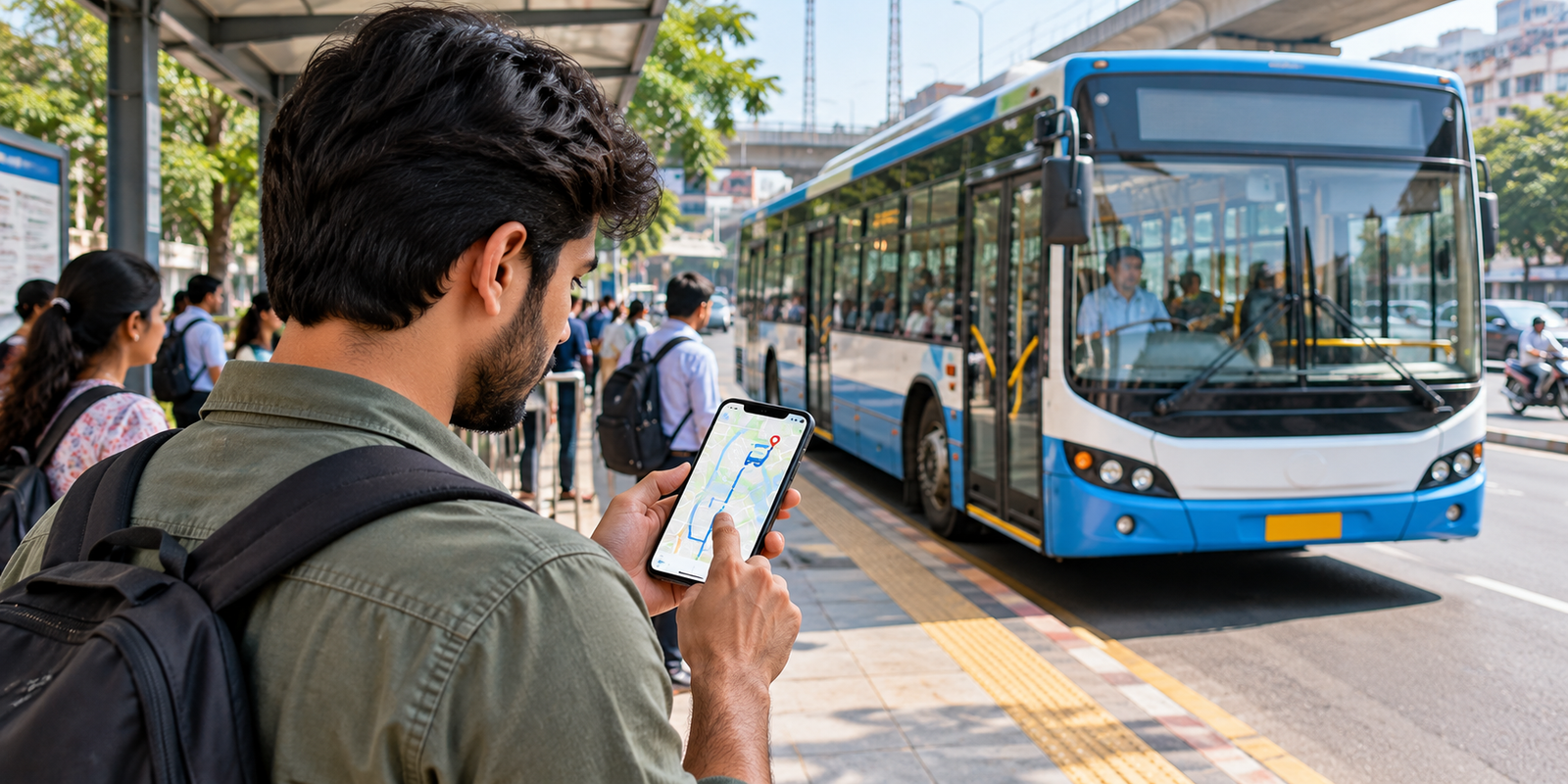
Bus location track tools can show where a bus is, estimate its arrival, and help you decide when to leave for the stop. The right option depends on your bus type and whether live data is available.
How Bus Location Tracking Works
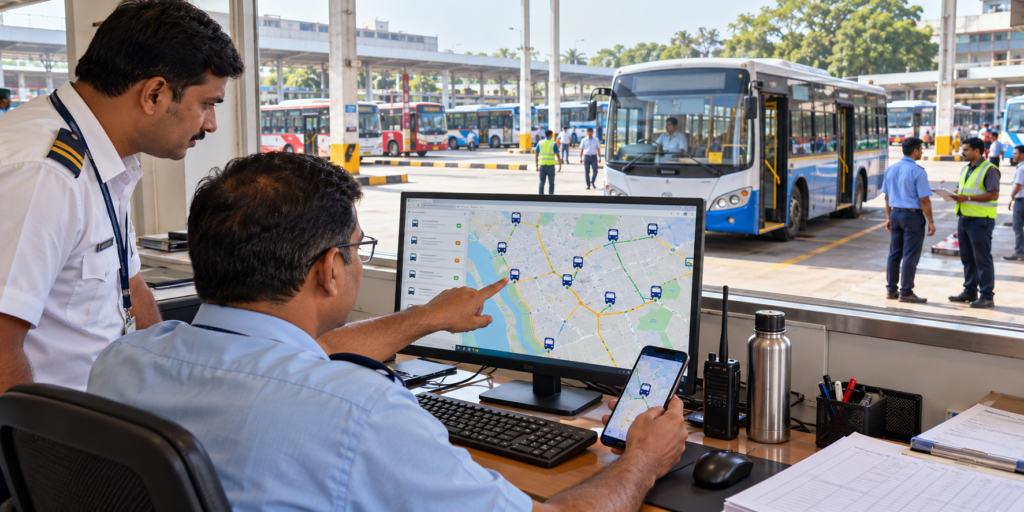
A live bus tracker normally receives location data from GPS equipment or a real-time transit feed and places it on a map. That information can also be used to estimate when the bus will reach a stop. Live position and ETA are related, but they are not identical.
For passengers, the useful details are the current location, route, next stop, expected arrival and available delay information. Coverage varies because the operator or transit agency must provide usable live data.
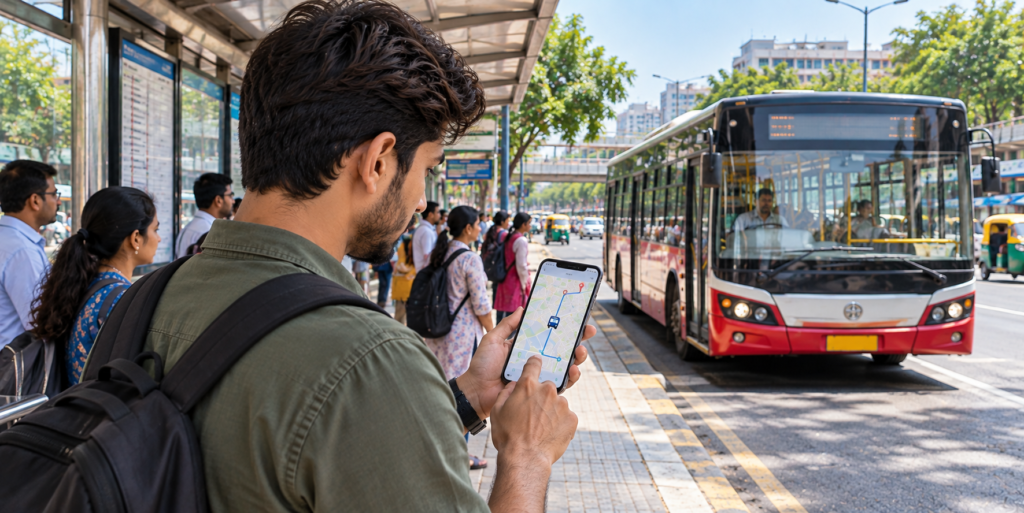
How to Bus Location Track Live
Using Google Maps
Google Maps can show transit departures and, for some stations, real-time departure information. On mobile, open Directions, choose Transit, and select your route. Some services only provide scheduled times, so live tracking is not universal.
Using a Transit or Operator App
For supported city buses, a dedicated transit app can be more useful. Chalo, for example, lets users enter a route number or name, select the route and tap a stop for live arrival information. Its features depend on the city.
Tracking a Booked Intercity Bus
For an intercity trip, start with the booking platform or operator. redBus offers Track My Bus on supported journeys, while AbhiBus provides live tracking through booking details when tracking is enabled for that service.
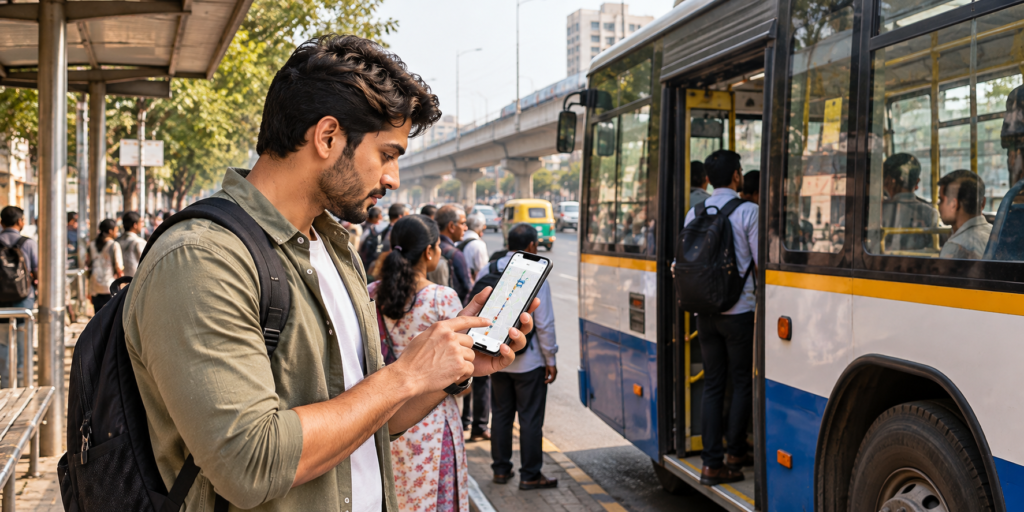
Which Tracking Method Fits Your Bus?
| Method | Best for | What you may need | Main limitation |
|---|---|---|---|
| Google Maps | Public transit | Destination or route | Live data is not universal |
| Transit/operator app | City buses | Route or stop | Coverage varies |
| Booking tracker | Intercity buses | Ticket, booking ID or PNR | Supported trips only |
| Fleet GPS system | School, office or commercial buses | Authorized access | Built for managed fleets |
For a normal passenger, start with the source connected to your journey. City riders should check local transit coverage. Intercity passengers should check the booking confirmation or operator. Parents and schools generally need a dedicated school-bus system.

What to Do When Live Tracking Does Not Work
A missing bus does not automatically mean it is cancelled. Tracking may not be enabled, the operator may not publish live data, or the service may show only scheduled times.
Check these first:
- Confirm the route, stop and travel date.
- Recheck the booking ID, ticket or PNR if applicable.
- Open the operator’s official app or website.
- Compare the result with the scheduled departure.
- Check for service notices or route changes.
A good tracker should make its coverage limits clear instead of implying that every bus can always be located live.
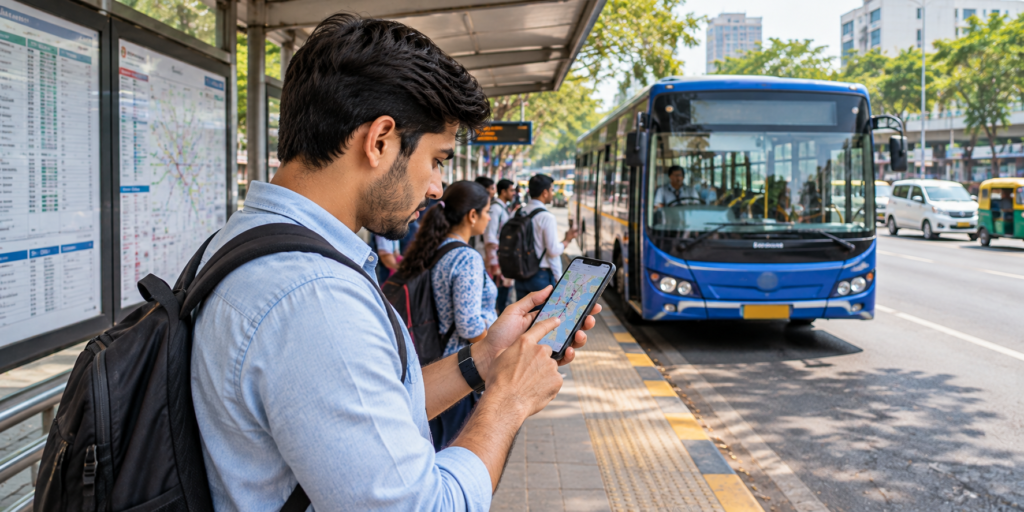
How to Choose a Bus Tracking App or Service
When comparing options, check:
- Does it cover your city, route or operator?
- Does it show location and arrival estimates?
- Do you need a booking number or login?
- Are delay or approaching-stop alerts available?
- Is the passenger feature free, paid or tied to another service?
- Does the system require GPS hardware on the bus?
For fleet owners, the decision is different. Commercial tracking systems can include multi-vehicle monitoring, alerts and route management, so the right choice depends on the operational need rather than passenger features.
India-Specific GPS and VLT Context
India also has government-backed Vehicle Location Tracking and Emergency Alert infrastructure using AIS-140-compliant solutions for relevant public-service vehicles. This is mainly useful background for operators, schools and fleet managers evaluating tracking systems.
Conclusion
The easiest way to bus location track live is to start with the service connected to your journey. Use Google Maps or a local transit app for supported city routes, and use the booking platform or operator for intercity travel. Before choosing a tracker, check coverage, live-data availability, ETA, alerts and access requirements.
Not necessarily. Live tracking depends on whether the operator provides real-time location data and whether that bus is supported by the tracking system.
Sometimes. Google Maps can provide real-time transit information for some services, while others may show only scheduled departures.
Check the route, stop, date and booking details first. If they are correct, the service may not provide live data for that trip, so check the operator or booking platform.
