






Classic dress shirts are a reliable starting point for a polished wardrobe. The best choice depends on fit, fabric, colour and where you plan to wear it. A good shirt should look clean without feeling restrictive.
What Makes a Dress Shirt Classic?
A classic dress shirt usually has a clean silhouette, a structured collar, long sleeves and a simple design that works with trousers, a suit or a blazer. “Classic” can also describe the fit, which is where shopping gets confusing. Retailers use terms such as classic, regular or traditional fit, but the actual cut can vary. Checking garment measurements is safer than choosing by the label alone.
For a timeless wardrobe, solid white and light blue are easy starting points. Subtle stripes can add variety without making the shirt difficult to style.


Choose the Right Fit
The right fit matters more than the word “classic” on the product page. A classic fit generally gives more room through the torso and sleeves, while slim fits sit closer to the body. Modern fits often sit between the two.
When trying a shirt, check five points:
- The collar should sit comfortably without choking or leaving a large gap.
- Shoulder seams should sit close to the shoulder edge.
- Buttons should lie flat without pulling across the chest or stomach.
- Sleeves should reach the wrist when your arms rest naturally.
- The body should allow movement without excessive fabric bunching.
A size chart showing actual garment measurements is especially useful. One current Indian listing publishes garment chest measurements alongside brand-fit and regular-fit labels, showing why the label alone may not tell the whole story.

Compare Classic Dress Shirts by Fabric
Fabric changes how a shirt feels and how much care it needs. Cotton is a dependable choice for office and formal wear. Linen can feel airy in hot weather but looks more relaxed because of its texture. Oxford and twill add texture when you want something less plain.
Instead of choosing fabric only by price, consider where you will wear the shirt, how often you will wash it, how much wrinkling you tolerate and whether you will wear it under a jacket.
| Option | Feel and appearance | Useful for | Watch for |
|---|---|---|---|
| Cotton | Clean and versatile | Office, meetings, events | Care needs vary |
| Linen | Light and airy | Hot-weather occasions | More visible wrinkles |
| Oxford | Textured and substantial | Business-casual wardrobes | Less formal feel |
| Twill | Smooth or subtly textured | Work and dressier use | Weight varies by weave |

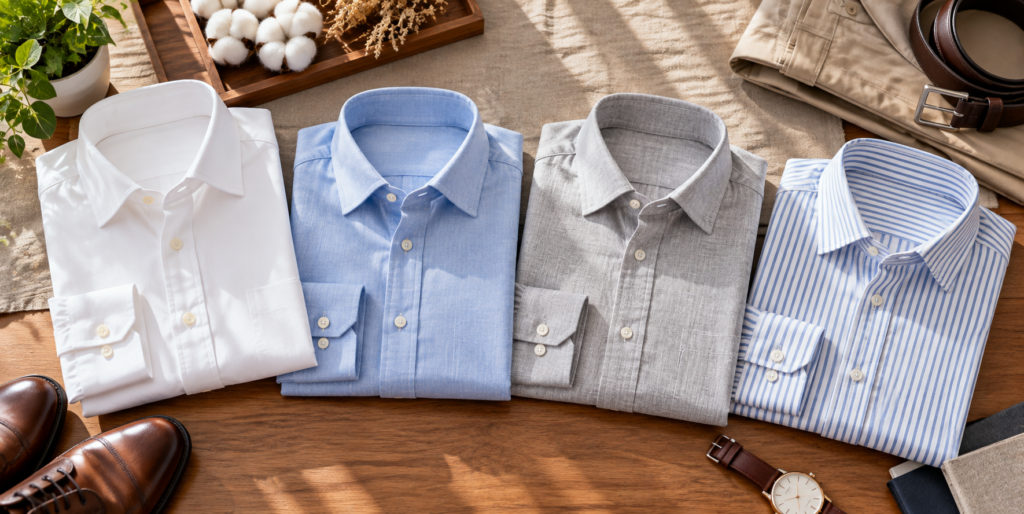
Classic Dress Shirts for Work, Weddings & More
For work, start with white, light blue or restrained stripes, especially under a suit or blazer. A spread or point collar gives a traditional dress-shirt look, while a simpler collar can feel less formal.
For weddings, the dress code should lead your choice. A white shirt is a practical foundation for formal suiting, while subtle blue, stripe or texture can work for less formal celebrations.
For interviews and important meetings, keep the shirt quiet and well-fitted. Aim for a polished appearance rather than a complicated pattern.
For smart-casual events, an Oxford-style fabric, softer collar or subtle pattern can reduce the formality while keeping the outfit neat.
Indian retailers commonly describe dress shirts as “formal shirts,” and product pages may show fit, fabric, size, price and return information together. Check the complete listing before ordering.

What to Check Before Buying
Use a simple checklist before you pay:
- Fit: Check garment measurements, not only S, M, L or “classic fit.”
- Fabric: Look at fibre content and the weave, then match it to your climate and routine.
- Construction: Check collar shape, cuffs, stitching and button placement.
- Versatility: Ask whether you can style the shirt with a suit, trousers or chinos.
- Value: Compare fabric, construction, fit information, after-sales policy and price together.
For India, check the current delivery area, exchange or return window and final checkout price. These details can change, so use the live retailer page as the source.

Conclusion
The best classic dress shirts fit your body, suit the occasion and give you enough styling flexibility for regular wear. Start with dependable colours, use measurements instead of relying only on fit labels, and choose fabric according to climate and maintenance. For online purchases, compare the product details, current price and return terms before ordering.
Not always. “Classic dress shirt” can describe a traditional style, while “classic fit” usually describes a roomier cut. Retailer terminology varies, so check the fit details and measurements.
White and light blue are easy starting points because they can work with suits, trousers and several tie colours. Subtle stripes can add variety when the event is less formal.
Measure a shirt that already fits you well, compare those measurements with the retailer’s garment chart, and check the current exchange policy before ordering. Indian listings may provide garment chest measurements in addition to the size label.


1 Comment
Pingback: Hoodie Shirt for Men: Find Your Best Fit